Contract Design vs. Legal Service Design: What’s the Difference, and Which Skill Do You Need?
Aug 17, 2026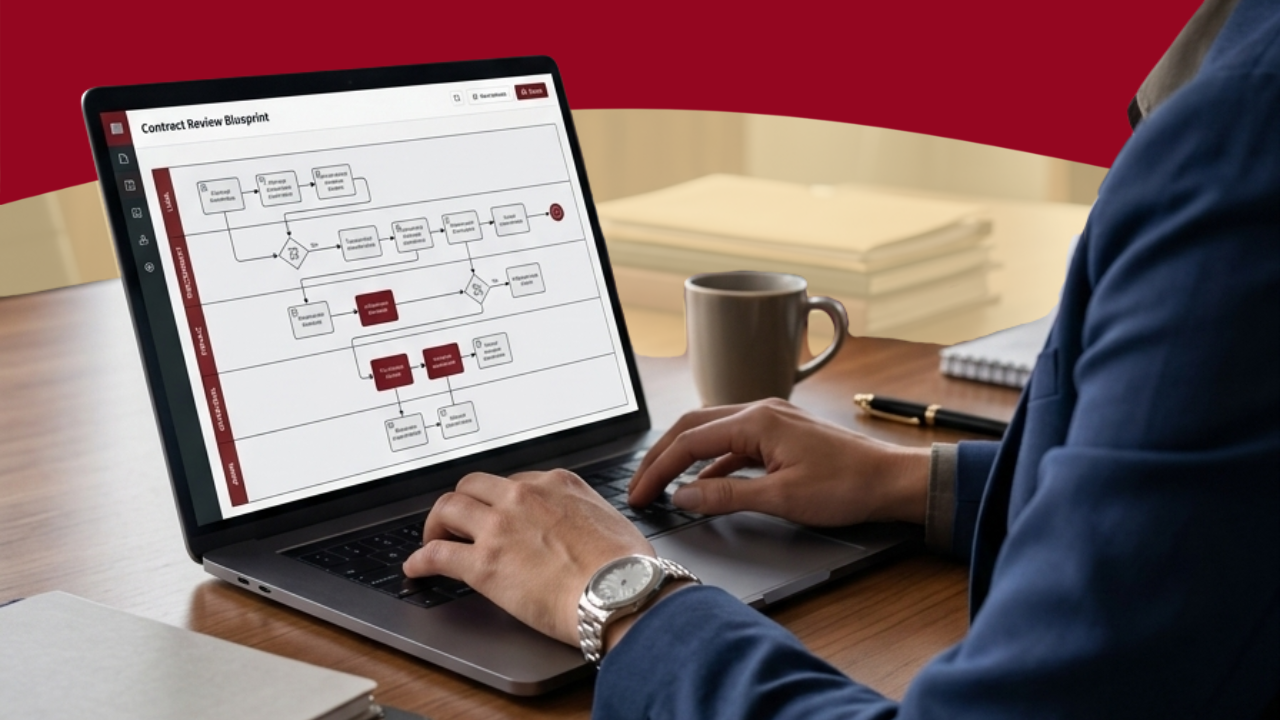
Demystifying the micro vs. macro layers of legal design, navigating where document transformation ends and service architecture begins, and building the exact skillset your career needs.
The momentum behind human-centered legal delivery is no longer up for debate. Modern legal departments, high-growth startups, and progressive law firms are actively shifting away from dense boilerplate and fragmented operational handoffs. Terminology like contract simplification and user journeys now fills legal tech conferences and enterprise mandates globally.
Yet, as legal professionals look to integrate these capabilities, a persistent confusion stalls progress: What is the practical difference between Contract Design and Legal Service Design?
Redesigning a document's typography or adding a visual summary won't fix a contract intake process that takes three weeks. Conversely, building an automated intake workflow fails if the resulting contract remains an unreadable 40-page wall of legalese.
Understanding how the document level (micro) and the system level (macro) work together isn't just an academic distinction—it dictates the impact of your work.
Contract Design transforms the artifact.
Legal Service Design optimizes the ecosystem.
While one turns dense legalese into clear, structured, visual agreements people can actually understand, the other designs the end-to-end journey—from intake to execution—ensuring the work flows seamlessly across stakeholders.
Micro vs. Macro: Deconstructing the Scope
To apply these disciplines effectively, you must first separate the legal artifact from the operational system surrounding it.
When we surveyed our community on the primary issues plaguing contracts today, a recurring theme emerged: "Operational misalignment is far more frequent than bad drafting. A contract can only document an agreement, it cannot fix an unclear process or broken expectations."
Why workflow pain runs deeper: A traditional legalese contract is often treated by legal teams as "job done." While dense legal text is certainly frustrating for the client, a broken workflow is destructive for everyone— creating daily friction, delays, and burnout for internal sales teams, legal ops managers, corporate executives, and external clients alike.
The truth is that contract design and legal service design are codependent. You cannot deliver a frictionless legal service using illegible contracts, and you cannot scale clear contracts through a chaotic, manual service delivery model.
How Practical Legal Roles Apply Both Skillsets
While job boards rarely list "Contract Designer" or "Service Designer" as standalone corporate job titles, mastering these capabilities provides an immediate competitive advantage across established legal roles:
Role-by-Role Application Matrix
In-House Counsel & Legal Operations
Contract Design: Replaces boilerplate legalese with structured plain-language terms; introduces executive cheat sheets and visual summaries to shorten sales review cycles.
Service Design: Maps department-wide intake and triage workflows; establishes self-serve playbooks, service catalogs, and governance frameworks that eliminate administrative bottlenecks.
Legal Engineers & AI Specialists
Contract Design: Structures document hierarchy and metadata tags so AI engines and CLM tools can accurately extract and process contract terms without parsing unstructured text.
Service Design: Translates user journeys into automated digital pathways, configuring no-code intake forms and automated routing rules that align naturally with non-lawyer behavior.
Contract Managers & Commercial Leads
Contract Design: Converts operational terms, milestones, and SLAs into intuitive visual timelines, responsibility matrices, and clear tables to prevent post-signature disputes.
Service Design: Designs cross-functional handoffs between sales, procurement, legal, and finance to ensure commitments made in contracts are systematically tracked and fulfilled.
Why Modern Employers Value This Combination
Deploying plain-language drafting alongside clear process architecture yields direct commercial ROI. Organizations heavily favor professionals who possess these skills for four distinct business reasons:
The Business Impact of Legal Design
1. Accelerated Contract Velocity: Plain-language visual contracts drastically cut back-and-forth negotiation ("redline tennis"). When counter-parties comprehend obligations instantly, deals close significantly faster.
2. Reduced Post-Signature Disputes: When business teams easily digest performance milestones, delivery schedules, and breach conditions, operational compliance improves and contract breaches decrease.
3. AI and CLM Readiness: Standardized, well-structured visual document layouts combined with clean workflow data pathways make it seamless for AI models and Contract Lifecycle Management platforms to accurately parse, index, and automate legal tasks.
4. Elevated Internal Legal Reputation: Transforming legal from a slow "approval bottleneck" into a streamlined service center dramatically improves the working relationship between legal counsel, sales teams, and corporate executives.
As legal departments continue their digital evolution, the division between document design and service delivery will keep shrinking. Standout legal professionals aren't choosing between fixing the document or fixing the process—they build the capability to execute both.
Which Capability Do You Need Next?
Choosing where to focus depends entirely on the core challenges facing your organization or career right now:
- Focus on Contract Design if: Your primary bottleneck is contract negotiation delays, dense legalese, unclear client communications, or difficult document templates that slow down deal sign-offs.
- Focus on Legal Service Design if: Your primary bottleneck is chaotic request intake, unclear team responsibilities, slow internal turnarounds, or preparing your legal workflows for automation and AI integration.
Mastering both micro (contract) and macro (service) design principles positions you as an indispensable, future-proof legal leader capable of driving end-to-end transformation.
Build Your Certification Path at Legal Creatives
Ready to transform your contracts and optimize your legal service delivery? Join our online Academy and select the specialized certification track that matches your career goals.
💡 Found this insightful? Share it with your legal ops & in-house network: