Anatomy of a Usable Contract: Same Content, Radically Different Business Outcomes
Jan 21, 2026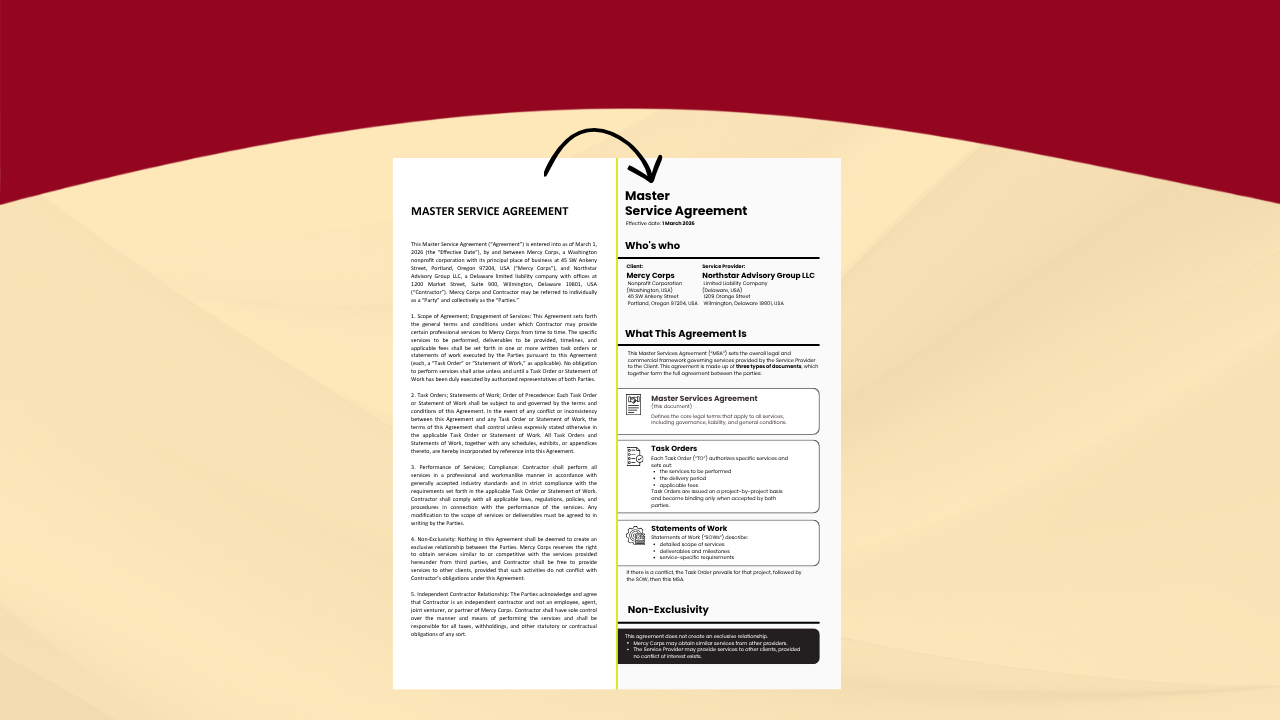
Most legal teams want contracts to be “clear”.
But clarity alone doesn’t make a contract usable.
A usable contract is not just legally sound;
it actively supports decisions, actions, and collaboration.
A familiar situation
Imagine a commercial contract sitting on someone’s desk.
The business team wants to know:
-
What do we need to do?
-
What can’t we do?
-
What happens if something goes wrong?
-
Who is responsible; and when?
In many contracts, the answers exist;
but they’re buried.
What a usable contract does differently
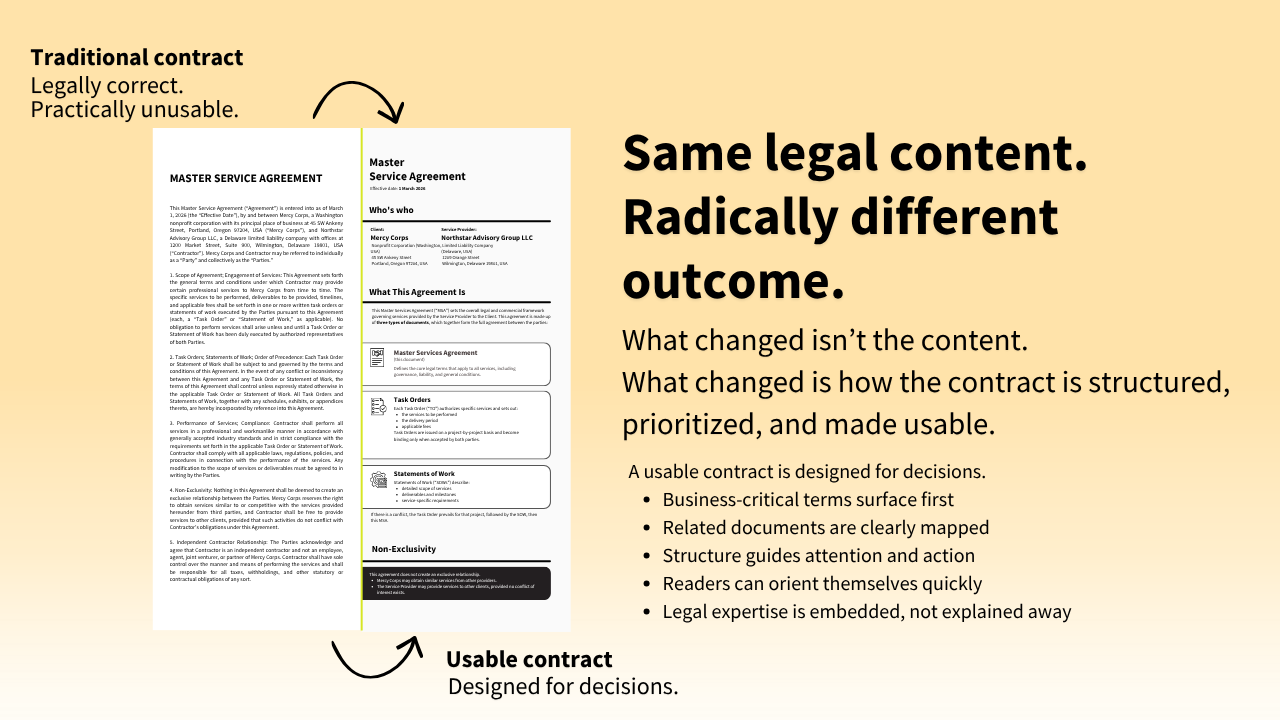
A usable contract is designed around how people interact with it, not just how it’s drafted.
It typically:
-
surfaces key obligations instead of hiding them
-
makes risks visible at the right moment
-
uses structure, hierarchy, and spacing to guide attention
-
allows readers to quickly orient themselves
-
supports non-linear reading
This doesn’t reduce legal rigor.
It increases legal impact.
Usability is not about simplification; it’s about intention
Usable contracts don’t “dumb things down”.
They:
-
respect legal complexity
-
translate it into actionable information
-
reduce misinterpretation
-
lower the need for constant explanation by legal
In practice, this often means:
-
clearer clause architecture and language
-
visual hierarchy and signposting
-
thoughtful use of layout and design
-
summaries and exemplars where they add value
Why this matters for legal teams
When contracts are usable:
-
business teams engage earlier
-
negotiations move faster
-
fewer mistakes happen downstream
-
compliance becomes part of daily work
-
legal teams regain time and credibility
Contracts stop being static documents.
They become working tools.
Building usable contracts is a learnable skill
Contract usability doesn’t come from talent or aesthetics.
It comes from:
-
understanding how people read
-
understanding how decisions are made
-
applying design and visual thinking deliberately
-
using plain legal language to reduce cognitive load and misinterpretation
These are skills legal teams can learn; and apply immediately to their own contracts.
This is where the real shift happens.